How Dokka Entreprenør works with HSE and quality

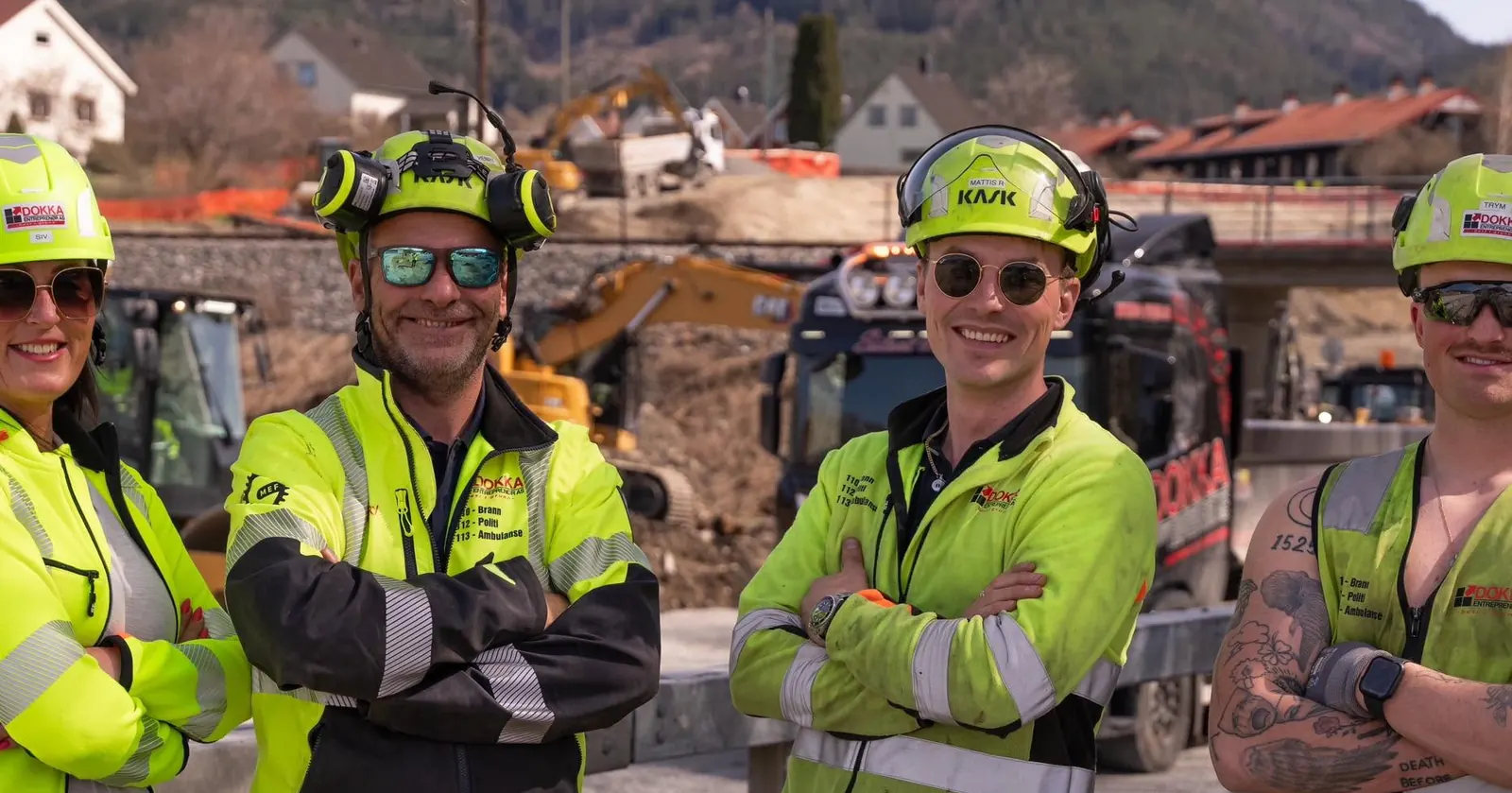
Customer story · Dokka Entreprenør
Dokka Entreprenør gave its employees equipment-specific training. Even so, the same nonconformity kept coming back at the ISO audits.
The challenge was not the training itself. It was the documentation.
For HSEQ Manager Morgan Brenden, it is a good example of what it takes to make HSE and quality work in practice. Dokka has 39 employees and several projects running at the same time. The contracts set requirements for documenting the work carried out, regardless of who the client is. In addition, the company is certified to ISO 9001, ISO 14001, ISO 45001 and ISO 39001, which involves systematic work on quality, environment, occupational health and safety and road traffic safety.
At the same time, the procedures have to work for the people who follow them on site. A machine operator’s main job is the work itself, but they also need to be able to document training, carry out the necessary checks and follow the HSE procedures that apply to the job.
Morgan and the project management face a different challenge. They need to know that the requirements are being met, without spending the working day checking forms, chasing documentation and cleaning up registrations afterwards.
Equipment-specific training became a recurring ISO nonconformity
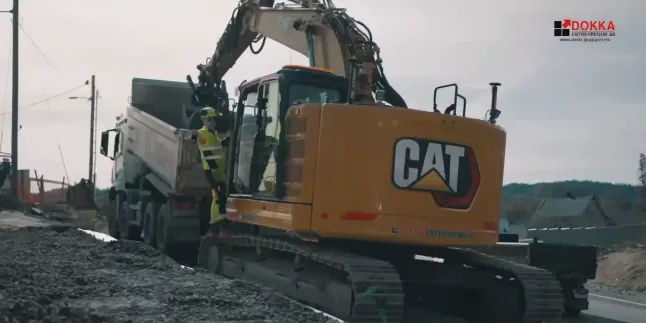
Equipment-specific training was an area that required a lot of follow-up.
The training was given. The challenge was making sure it was documented.
«It is not that we do not give equipment-specific training, but we have struggled to document it», says Morgan.
When an employee started using a new machine, the training had to be documented in several steps. The site manager and the operator filled in a checklist. Morgan had to check that it had been done. The documentation was then turned into a PDF and registered as a competence on the employee.
Then the same process had to be repeated for the next person and the next machine.
Equipment-specific training therefore became a nonconformity that kept coming back at the ISO audits.
The training was carried out. The challenge was the workflow around the documentation. With more employees and machines, it required many manual steps and a lot of follow-up from Morgan.
«There are not enough hours in the day to sit and follow this up properly», says Morgan.
The challenge was to have a workflow that made it possible to document the training systematically for every employee and every machine, without Morgan having to check and register everything manually afterwards.
HSE documentation that had to be cleaned up afterwards
The same pattern showed up elsewhere.
Employees who worked on several projects could log their hours in the evening or the next day. When registration happened afterwards, photos and checklists could also end up on the wrong project.
The error could be fixed. But first someone had to spot it. Then the documentation had to be moved and corrected. That gave Morgan more follow-up afterwards.
Registering afterwards also created a problem for the crew overview. On construction sites, there is a requirement for crew lists showing who is working on site.
When hours were only logged in the evening or the next day, the crew list was not necessarily up to date while the work was going on.
With employees spread across several projects, Dokka therefore also needed to know who was registered on the different projects while the work was going on.
From registering afterwards to the right documentation from the start
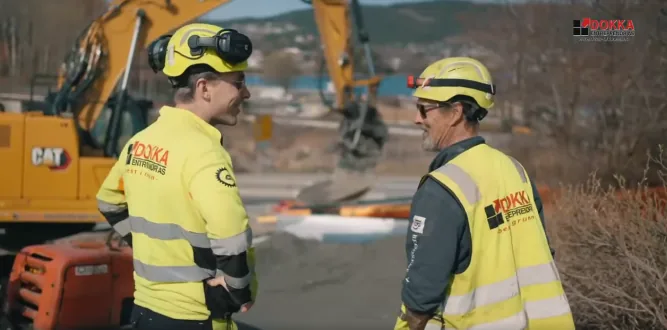
When Dokka Entreprenør started using Ditio Core, they also changed how the working day is registered.
Employees log in when the working day starts. They choose the project and work order before the work begins.
Through the integration between Ditio and HMSREG, logging in and out is used to update the crew list at the same time. That way, employees do not have to register the same information in several places.
When the working day starts on the right project, hours, photos and checklists also end up where they belong.
Because registration happens in real time, project management can also see who is on which project throughout the working day.
As a result, documentation becomes far more a part of the workflow on the project.
«And it leaves me less to follow up in day-to-day operations», says Morgan.
Easier to document training in the field
The workflow for equipment-specific training has also changed.
If someone logs on to an excavator without registered training on that particular machine, Morgan gets an alert on the dashboard.
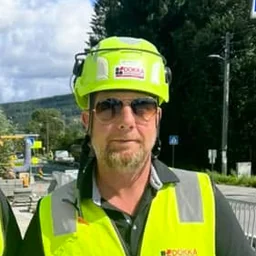
«Now I get a message on my dashboard if someone logs on to the excavator without having been trained on it. That makes it easy for me to follow up.»
Morgan Brenden, HSEQ Manager at Dokka Entreprenør
This makes it easier to follow the same procedure across employees and machines. The training is carried out as before, but the documentation is easier to do where the work happens, while Morgan gets an overview of what is missing.
Traceable documentation from the work in the field
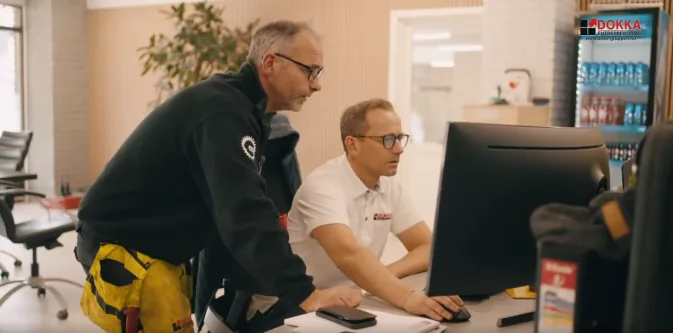
Traceability is an important part of quality work at Dokka. It should be possible to document what has been done and find the documentation again when it is needed.
The contracts require the work carried out to be documented. This can, for example, be checklists showing pipes in the trench, manholes, build-up with different masses and compaction.
When completed work is documented with photos in Ditio, each photo gets a geolocation. Dokka can then search for the photos and see exactly where they were taken.
This is especially useful when the client or an auditor asks for documentation from a specific area of the project.
«You can just zoom in on a specific chainage point and see all the documentation linked to it», says Morgan.
Traceability also has a commercial side. Good documentation is important for showing what has been done, documenting the delivery to the client and having a basis for getting paid for the work.
Job safety analysis and incident reporting in the field
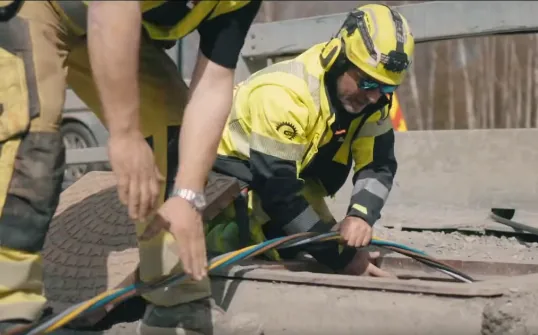
Dokka has an overall risk assessment for its regular work. When a task involves higher or unfamiliar risk, for example work near high voltage cables, they carry out a job safety analysis (JSA). They go through the work to be done, assess the risk and decide which measures must be in place before the work starts.
The JSA is carried out in Ditio. Activities, risks and measures are documented, and everyone taking part in the work signs.
«Sometimes you sit in a site hut and run through it, and other times you are out by the edge of the trench», says Morgan.
Reporting directly from the field
Unwanted incidents are also reported directly from the field in Ditio. Employees report where the work is happening, so the incident is documented and can be followed up.
When employees can carry out a JSA or report directly from the field, HSE becomes part of the working day on the project and not something that has to be documented afterwards.
When the auditor asks for HSE and quality documentation
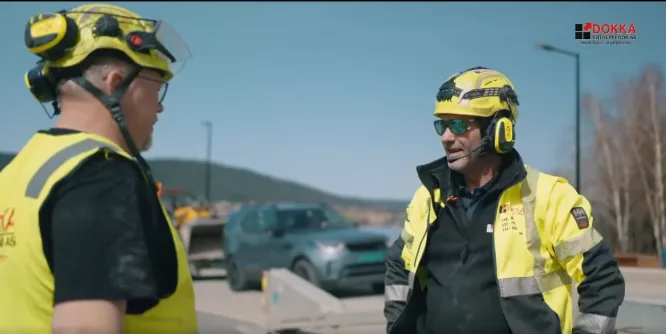
Once a year, Dokka Entreprenør is visited by auditors. Showing a handbook of procedures and process descriptions is not enough.
The auditors also visit projects to see how the requirements are followed in practice. If they meet an employee in an excavator, they may ask whether the machine is maintained and whether the operator has been trained on that exact machine. Dokka must then be able to find the documentation showing that the requirements have been met.
That is why Morgan wants documentation to be registered along the way, where the work happens. Then it is easy to find when the auditor asks.
More overview, less follow-up
«The simple overview on the dashboard is very valuable, that we have control of the crew, competence and equipment-specific training. Those are three important things in a company.»
Morgan Brenden, HSEQ Manager at Dokka Entreprenør
When training, hours, photos and checklists are registered while the work is going on, the information ends up in the right place from the start. For Morgan, that means less time chasing, checking and correcting documentation afterwards.
At the same time, Dokka has the overview ready when it is needed, in day-to-day follow-up, towards the client and when the auditor comes.
With Ditio Core, hours, training, checklists, photos, JSAs and incident reports are gathered in one system, linked to the right project and registered where the work happens.
What has changed with Ditio Core
- Equipment-specific trainingTraining is easy to document in the field, and missing registrations become visible.
- Crew overviewLogging in and out updates the crew list through HMSREG.
- DocumentationPhotos and checklists are registered on the right project while the work is going on.
- TraceabilityGeolocation makes it possible to find documentation from specific places in the project.
- JSA and incident reportingJob safety analyses and unwanted incidents are registered and followed up in one platform.
- Follow-upLess time spent correcting and chasing documentation in day-to-day operations.
About Dokka Entreprenør
Dokka Entreprenør is an excavation contractor in road and groundwork, headquartered in Dokka in Nordre Land, Norway, with 39 employees.
Dokka Entreprenør is certified to ISO 9001, ISO 14001, ISO 45001 and ISO 39001. Its clients include the Norwegian Public Roads Administration, county authorities, municipalities and other building contractors.
The company uses Ditio Core and Ditio Flow.
Frequently asked questions
How does Dokka Entreprenør work with HSE and quality?
Dokka registers HSE and quality documentation where the work happens. Training, hours, checklists, photos, JSAs and incident reports are registered in Ditio Core and linked to the right project from the start. HSEQ Manager Morgan Brenden therefore does not have to chase and clean up documentation afterwards.
Which ISO certifications does Dokka Entreprenør have?
Dokka Entreprenør is certified to ISO 9001 (quality), ISO 14001 (environment), ISO 45001 (occupational health and safety) and ISO 39001 (road traffic safety). The auditors come once a year and also visit the projects to see how the requirements are followed in practice.
How does Dokka keep its crew lists up to date?
Employees log in to Ditio Core when the working day starts. Through the integration with HMSREG, logging in and out is used to update the crew list in real time.
How does Dokka find documentation when the client or the auditor asks?
Photos taken in Ditio get a geolocation. Dokka can therefore zoom in on a specific area of the map and see all the documentation linked to it, even after the work has been covered.
What is a job safety analysis (JSA)?
A job safety analysis is a review of risks and measures before a task with higher or unfamiliar risk, for example work near high voltage cables. At Dokka, the JSA is carried out in Ditio, and those taking part in the work sign it.