Why Mass Transport Documentation Is Becoming More Important in Construction Projects

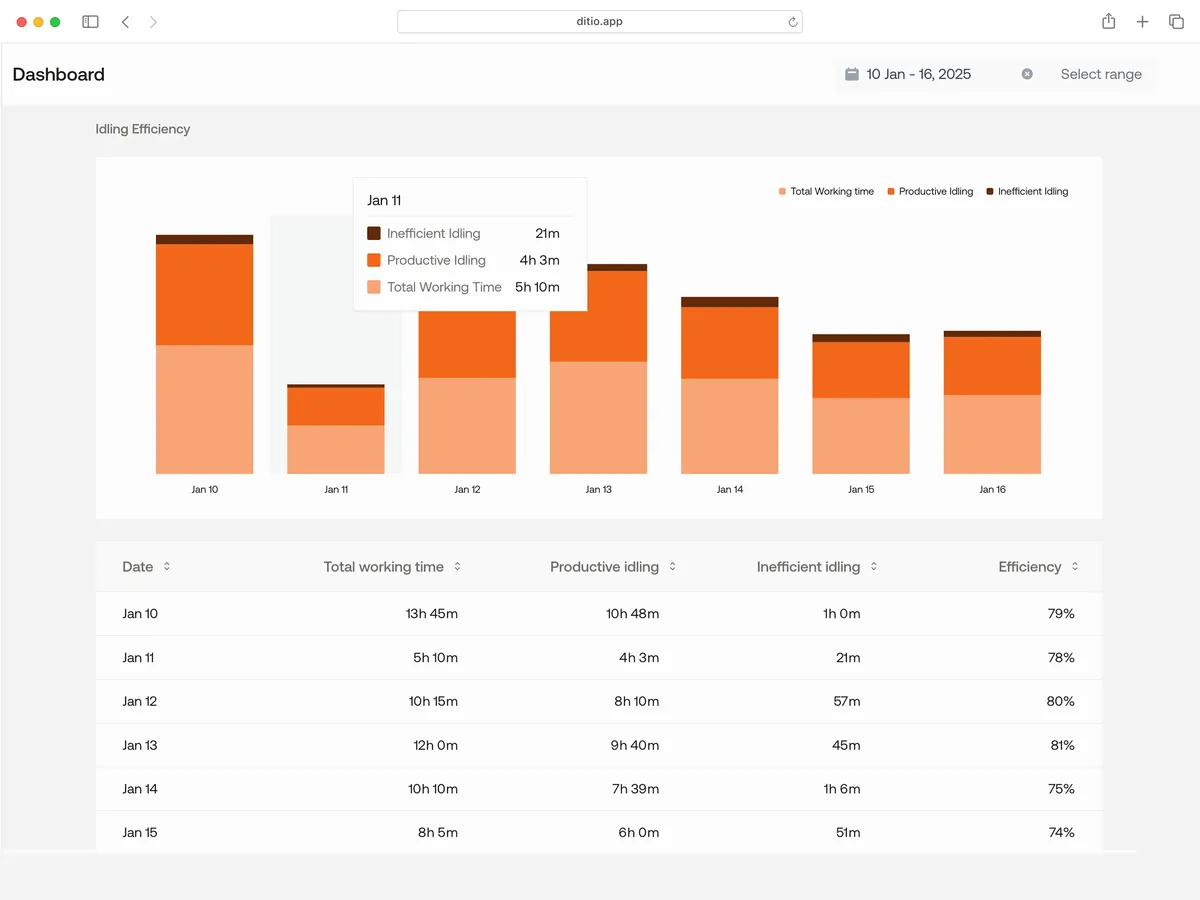
Mass transport is often one of the largest cost drivers in a construction project. Yet in many places it is still managed with manual lists, after-the-fact registration, and reports that only deliver value once the day is already done.
Documentation requirements have changed rapidly in recent years. Clients and authorities expect more detailed data on what is actually happening out in the project.
Where do the masses come from? Where are they taken? How much has been moved? What type of material is it? And can this be documented when someone asks?
For contractors, this means that documentation of mass transport is no longer just about administration. It is about traceability, risk management, project control, and better decisions along the way.
Traceability requirements are increasing
Many projects handle masses that place high demands on documentation. This can include contaminated soils, alum shale, nitrogen-bearing tunnel masses, or earthwork materials that must be handled and placed in specific ways.
In these cases, it is not enough to know the masses have been hauled away.
The contractor must be able to document where the masses were sourced, how much was transported, when the transport took place, and where the masses were deposited.
This becomes especially important in projects where different material types are handled in parallel. Clean masses, contaminated masses, and recycled materials may each have different requirements for reception, temporary storage, and further use. The project must therefore have control over both origin, quantity, and placement. It is not enough to know the masses were moved. You must be able to show where they came from, where they ended up, and when the transport actually took place.
More contractors are now finding that clients want ongoing insight into this data. This is driven by environmental requirements, regulatory demands, and the need for better control throughout the project period.
Manual processes make documentation vulnerable
Many projects still rely on manual routines to track mass transport. Information is typically recorded on paper, in Excel, or in different systems that do not communicate with each other.
This makes documentation time-consuming to retrieve, while also increasing the risk of errors.
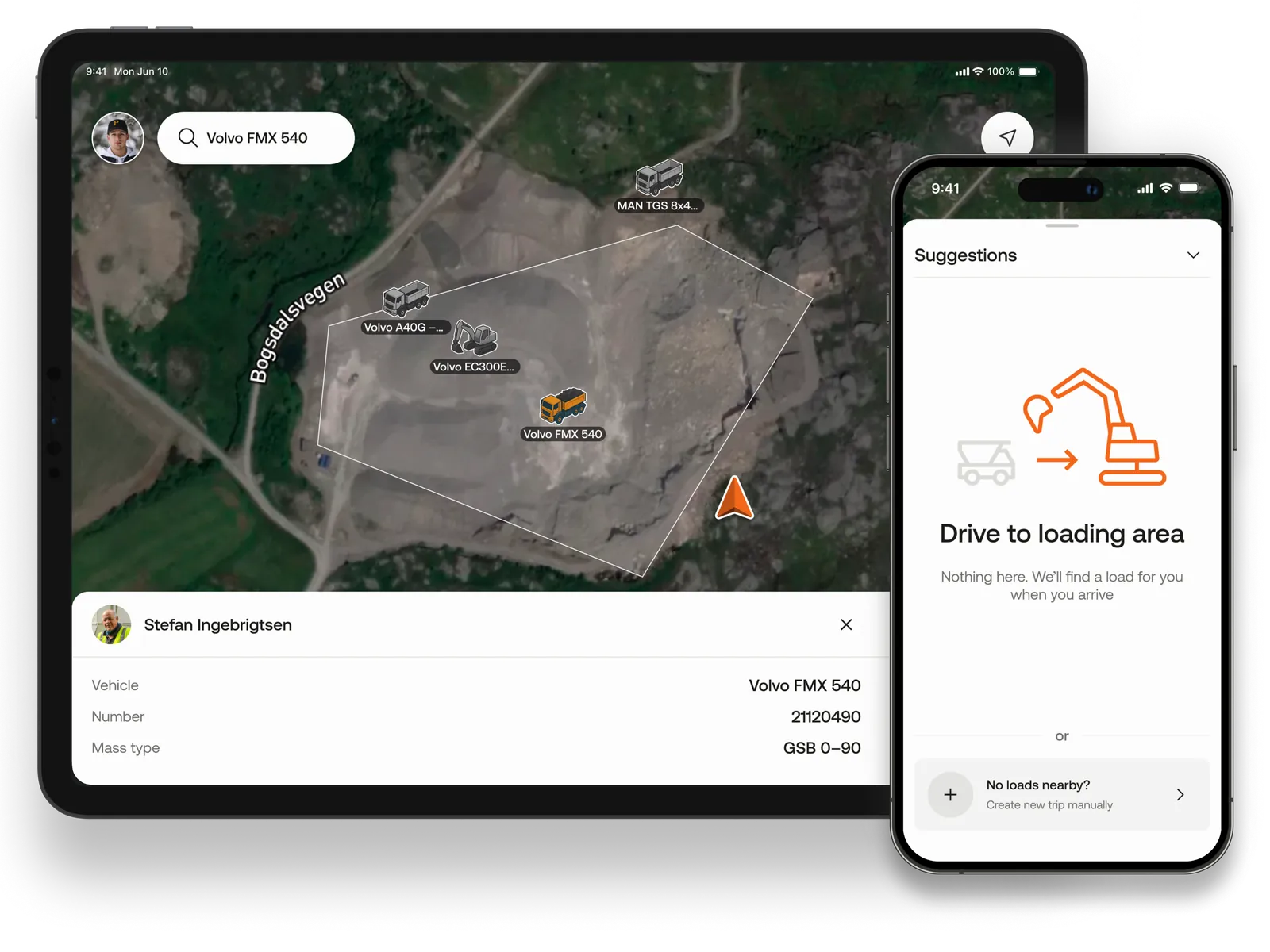
When information must be collected manually from multiple sources, it also becomes difficult to get an up-to-date picture of production. How much has been hauled? Where are the trucks? Where is the waiting time occurring? Is capacity being used effectively?
The result is often that project management lacks insight when decisions actually need to be made.
Real-time data enables better operations
This is why more contractors are moving to digital solutions to document and monitor mass transport.
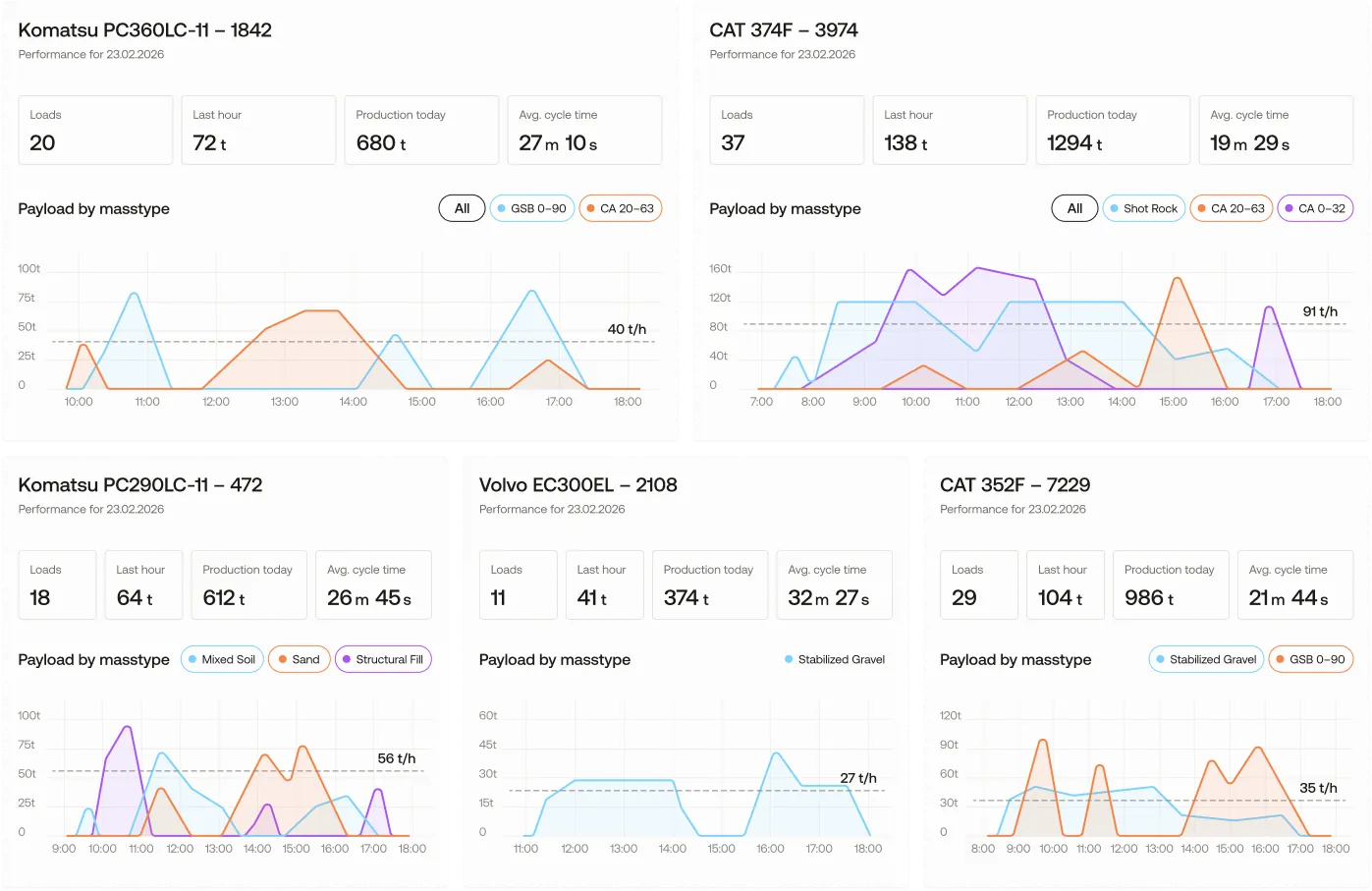
When data is recorded automatically from the field, it becomes possible to follow transport continuously throughout the project. Project management gains better visibility into where vehicles are located, where masses are being transported, and how production is actually progressing.
This makes it easier to identify bottlenecks, reduce idle time, and adjust operations along the way.
This is an important shift. Documentation is no longer just something to be delivered at the end. Used correctly, documentation becomes a tool for steering production better every day.
Better data means better economics
For many contractors, mass transport represents a significant share of project costs. Small improvements in transport flow, waiting time, cycle time, or capacity utilisation can therefore have a major impact on both progress and economics.
A common challenge is finding the right balance in transport capacity. If the project has too few trucks, the machines sit and wait. If the project has too many trucks, the trucks sit and wait. Both cost money. When project management can see cycle times, waiting times, and transport flow on an ongoing basis, it becomes easier to adjust capacity and use resources more effectively.
Documentation then becomes more than a report after the fact. It becomes a foundation for better operations while the project is under way.
When contractors have access to actual data from transport operations, it becomes easier to understand where resources are being used, where losses occur, and where there is room for improvement.
This provides a better basis for daily decisions, as well as for calculation and planning in future projects.
Documentation becomes part of project management
Traditionally, much documentation has been collected after the project is complete. The problem is that this is often too late.
When field data is available while work is in progress, documentation becomes part of the daily project management. This provides better visibility throughout the project, easier reporting, and higher quality in the decision-making basis.
The contractor does not just get answers about what happened. They get insight into what is happening now, and what can be improved.
Digital data becomes a competitive advantage
Clients increasingly expect documentation based on actual project data, not just manual reports and estimates.
For contractors, this means the ability to document mass transport is becoming ever more important. Not just to meet traceability and reporting requirements, but also to gain better control over production while work is ongoing.
Those who succeed best are the ones who use documentation actively. Not just as evidence after the fact, but as operational information in daily work.
How Ditio helps contractors with mass transport
Ditio Flow helps contractors document and monitor mass transport in real time.
By collecting data directly from the field, project management gains better insight into production, capacity, transport flow, and resource utilisation. At the same time, traceability and documentation become easier to manage throughout the project.
Ditio Flow makes mass transport measurable, traceable, and manageable.
The result is less manual work, better project control, and a stronger decision-making foundation for improving project profitability.
Explore how this works in the field with Ditio as a mass transport app.